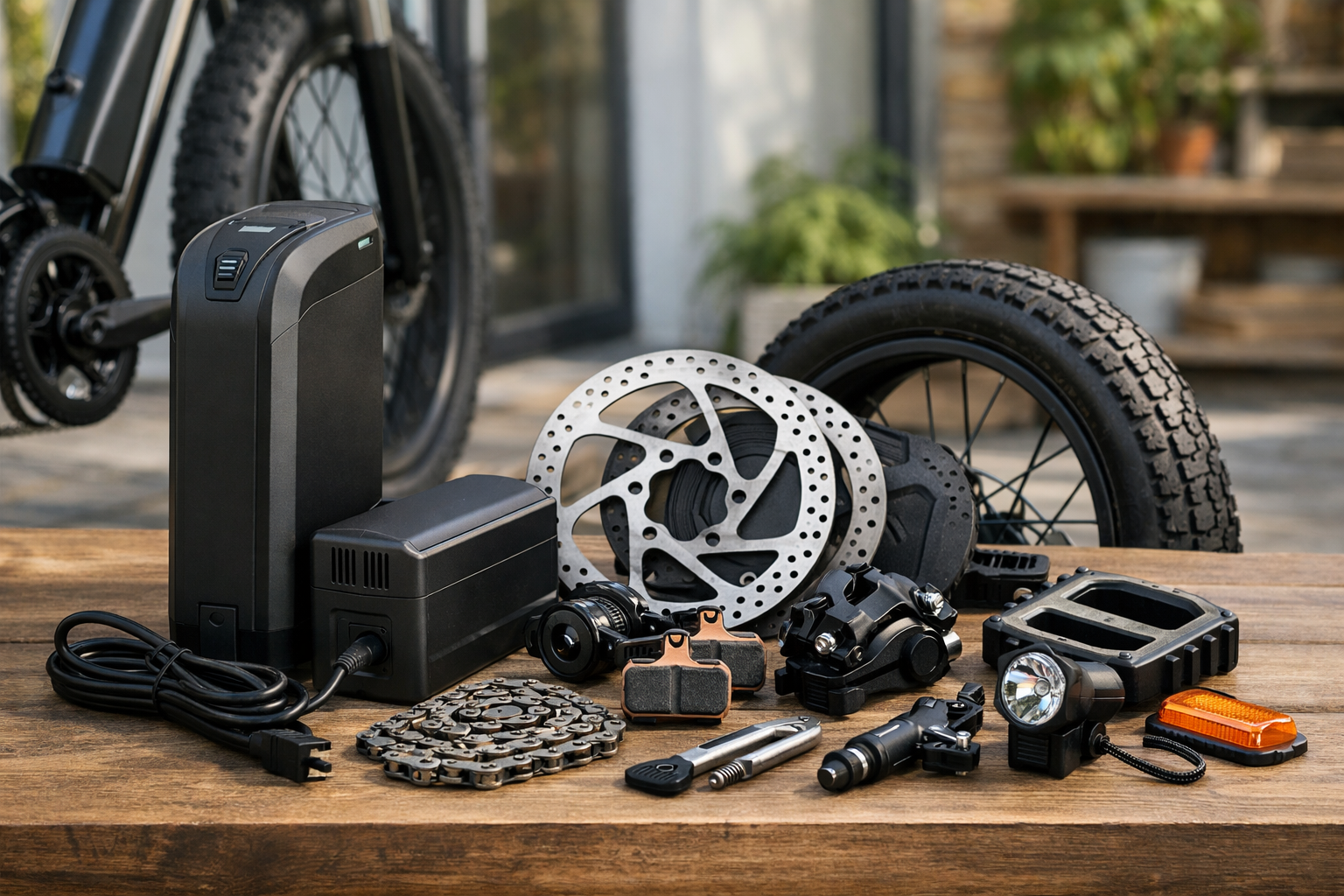
Electric bike parts batteries and chargers are a big part of long-term ebike ownership. Once you move beyond the initial bike purchase, you quickly realize that replacement parts, battery compatibility, charger safety, and ongoing maintenance all matter if you want to keep riding with confidence and avoid costly mistakes.
That is why this hub exists. Whether you are trying to replace a worn component, understand when a battery may need attention, or figure out which charger fits your setup, this guide will help you make smarter decisions before you spend money.
As this section of the site grows, it will continue to organize practical content around electric bike parts batteries and chargers so riders can shop more carefully, avoid compatibility problems, and get more value from their ebike over time.
Why Electric Bike Parts Matter More Than Many Buyers Expect
A lot of people focus almost entirely on the initial bike purchase.
That makes sense at first. But once you own an ebike, a different set of questions starts to matter:
- Which parts wear out first?
- When should a battery be replaced?
- Do all chargers work the same way?
- Which upgrades are useful, and which are not?
- What should you check before ordering replacement components?
Those are practical ownership questions, not just browsing questions. And for many riders, they become urgent once something stops working, wears down, or needs to be replaced.
That is why a good parts and battery hub is useful. It helps riders avoid guesswork and make safer, more informed decisions.
The Three Main Categories Riders Usually Need
Most electric bike replacement and support purchases fall into three main buckets:
- replacement parts
- batteries
- chargers
Each category has its own risks, compatibility issues, and buying considerations.
Electric Bike Replacement Parts
Replacement parts are often the first ownership-related purchases riders make.
Some are basic wear items. Others are more bike-specific. The key is understanding the difference between a general bicycle component and an ebike-related part that may require closer compatibility checks.
Common replacement part categories include:
- brake pads
- rotors
- tires and tubes
- chains
- freewheels or cassettes
- pedals
- grips
- saddles
- lights
- fenders
- racks
- kickstands
- display units
- throttles
- controllers
- wiring-related components
Some of these are simple maintenance items. Others are highly model-dependent.
That is why it is smart to slow down before ordering anything electrical, structural, or brand-specific.
Which Electric Bike Parts Wear Out First?
Some parts naturally wear faster than others.
In normal use, riders often need to replace these items before anything major happens:
Brake Pads
Brake pads are one of the most common wear items on electric bikes, especially on heavier models and bikes ridden in hills, traffic, or wet conditions.
Tires And Tubes
Tires and tubes take constant abuse from pavement, debris, terrain, rider weight, and tire pressure habits. Fat tire ebikes can look durable, but they are still wear items.
Chains And Drivetrain Parts
Because ebikes often put more stress through the drivetrain than non-electric bikes, chains and related components may wear faster than some new riders expect.
Lights, Grips, And Small Utility Components
These may not fail as often as braking or drivetrain parts, but they do matter for comfort, visibility, and daily usability.
Before You Buy Any Replacement Part
Not every replacement part is universal.
This is where riders can make expensive mistakes. A part may look right, sound right, or be marketed as compatible, but still be the wrong fit for your bike.
Before buying any replacement part, check:
- your exact bike brand and model
- wheel size
- brake type
- rotor size, if relevant
- tire dimensions
- connector style for electrical components
- battery system compatibility
- whether the part is truly universal or model-specific
For electrical components in particular, guessing is a bad strategy. That includes displays, throttles, chargers, battery connectors, and controllers.
Electric Bike Batteries
Batteries are one of the most important and expensive ownership-related categories.
They affect range, ride planning, charging habits, storage, long-term cost, and overall confidence in the bike. They are also one of the areas where riders should be especially careful.
Not all batteries are interchangeable. Not all replacement battery listings are equally trustworthy. And not every “works with” claim deserves confidence.
When Riders Start Thinking About Battery Replacement
A rider may start looking at replacement batteries when:
- range starts to feel noticeably weaker
- charging habits have become inconsistent
- the original battery is aging
- they want a backup battery for longer rides
- the bike has been unused for a long period
- the original battery is no longer performing as expected
Battery replacement is not something to rush. It is something to verify carefully.
What Matters Most When Comparing Electric Bike Batteries
If you are evaluating a battery purchase, focus on the things that matter most:
Compatibility
This is the first question, not the last.
A battery needs to match the system it is intended to work with. That includes connection style, voltage, form factor, fit, and brand-specific system expectations.
Capacity
Battery capacity affects how much energy the battery stores and how that can translate into ride time or range. Bigger is not always better if the battery does not fit your needs, your bike, or your budget correctly.
Intended Use
Some riders want a direct replacement. Others want a second battery for longer trips or more flexible ride planning. The right decision depends on how the bike is actually used.
Cost Versus Long-Term Value
Battery purchases can be expensive, so the real question is not just price. It is whether the purchase meaningfully supports the bike’s useful life and your riding needs.
Battery Safety Matters
Battery decisions should be handled more carefully than accessory decisions.
That is because batteries affect both performance and safety. Riders should be especially cautious with listings that are vague about compatibility, construction, or intended fit.
A good rule is simple: if the compatibility details are unclear, do not assume.
Electric Bike Chargers
Chargers sound simple until you need one.
Then the questions start quickly:
- Can I use a different charger than the one that came with the bike?
- Are all chargers with the same plug safe to use?
- What if I lost my original charger?
- Can I buy a backup charger for work or travel?
- Does charging speed matter?
These are common ownership questions, and the answer is often the same: compatibility comes first.
What To Check Before Buying An Ebike Charger
Before ordering a charger, verify:
- your exact bike model
- battery voltage
- charger output specifications
- connector type
- whether the charger is meant for your battery system
- whether it is a direct replacement or backup charger
A charger is not a category where “close enough” is good enough.
Why Riders Often Need A Second Charger
A second charger can make sense for some owners.
Common reasons include:
- one charger for home and one for work
- one for travel or RV use
- replacing a lost or damaged charger
- reducing the hassle of moving one charger around constantly
That said, convenience should never override compatibility.
Parts, Batteries, And Chargers Are Different Buying Decisions
It helps to separate these categories mentally.
Parts
These often solve wear, damage, comfort, or utility problems.
Batteries
These usually involve range, aging, replacement cost, and safety.
Chargers
These are mostly about compatibility, reliability, and everyday charging convenience.
Grouping them together in one hub makes sense for navigation, but buyers should still approach each category differently.
The Smartest Way To Shop For Electric Bike Parts And Power Components
If you are trying to buy the right item without wasting money, use this process:
Step 1: Start With Your Exact Bike
Do not shop from memory alone. Confirm the exact brand and model first.
Step 2: Identify The Real Problem
Is the issue wear, damage, reduced range, missing equipment, or charging failure? The clearer the problem, the easier it is to avoid buying the wrong solution.
Step 3: Separate Universal Items From Model-Specific Items
Tubes, grips, and some basic accessories may be easier to source. Electrical components and battery-related items usually deserve more caution.
Step 4: Prioritize Compatibility Over Speed
Ordering quickly feels productive, but ordering correctly is what actually matters.
Step 5: Think About Ownership, Not Just Emergency Replacement
Sometimes the best purchase is not a panic replacement. It is a backup charger, a planned battery replacement, or a maintenance item bought before it becomes urgent.
Common Mistakes Riders Make
A lot of parts-related frustration comes from avoidable mistakes.
Here are some of the most common:
Assuming All Chargers Are Interchangeable
They are not.
Treating Batteries Like Generic Accessories
They are not.
Ordering Parts Before Confirming Fit
This is one of the easiest ways to waste time and money.
Ignoring Wear Items Until They Become Problems
Basic maintenance parts are easier to manage when replaced early instead of after a bigger issue develops.
Confusing General Bike Parts With Ebike-Specific Electrical Components
Some items are simple. Others are system-dependent and deserve much more caution.
Who This Hub Is For
This page is especially useful for:
- first-time ebike owners
- riders replacing worn parts
- buyers looking for a second charger
- owners trying to understand battery replacement
- shoppers comparing compatibility before ordering
- riders who want to keep their bike useful for longer
If that sounds like you, this hub is the right place to start.
Explore More Electric Bike Buying Guides
If you are still shopping for a bike rather than replacing ownership items, browsing more electric bike reviews can help you compare categories and brands before you buy.
If you are deciding between models, explore our electric bike comparisons to evaluate trade-offs in comfort, range, utility, and overall value.
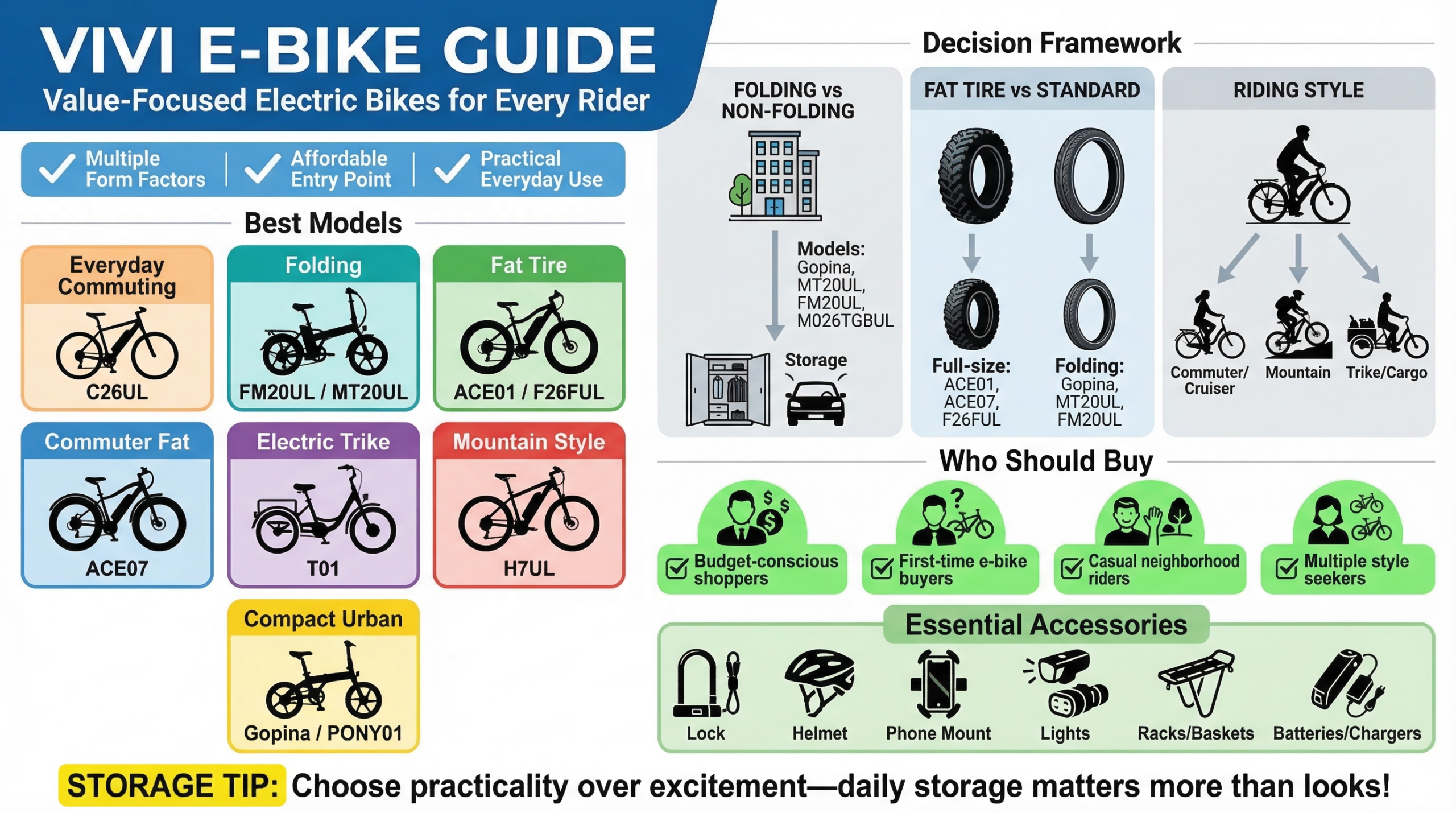
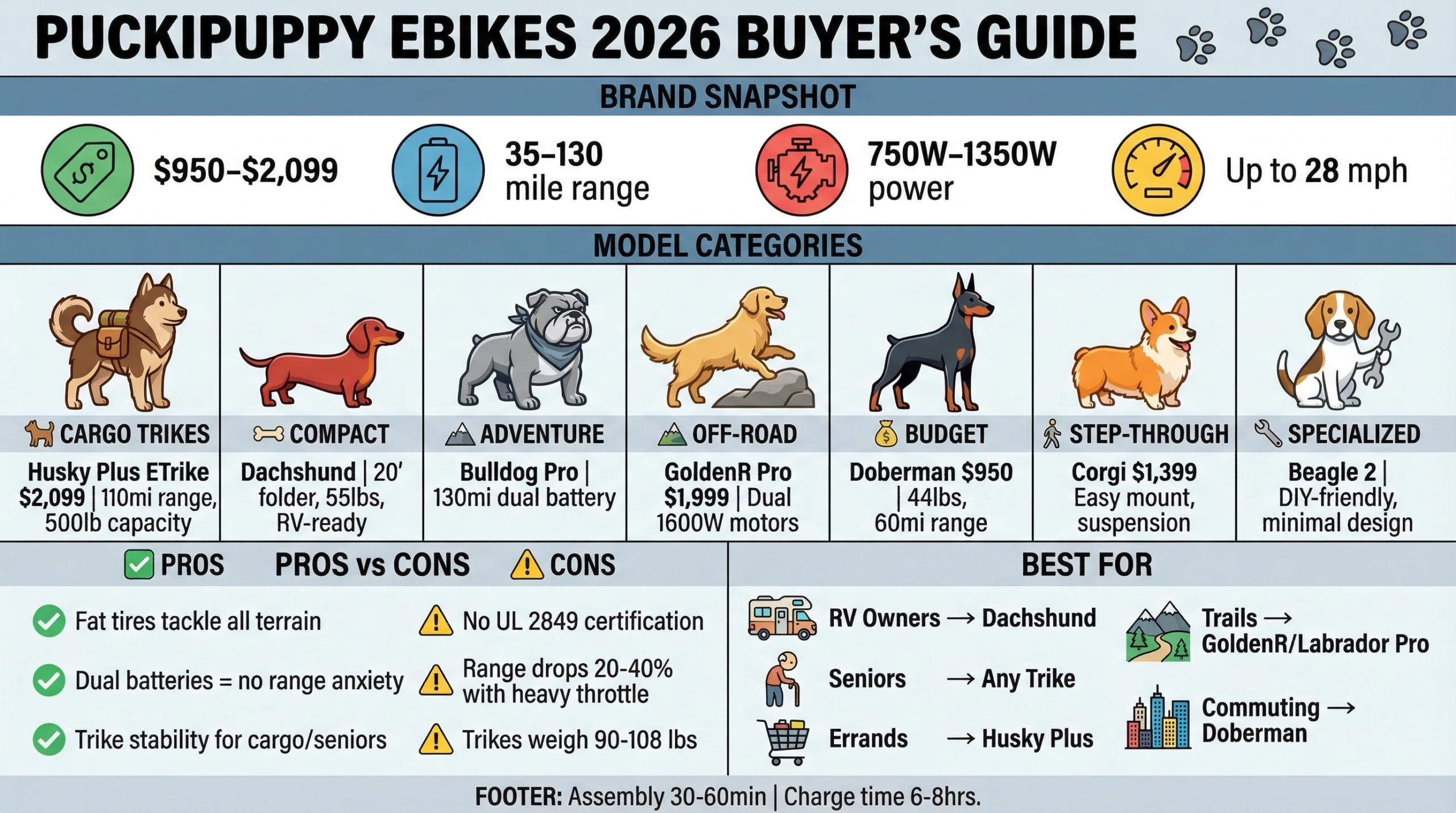
If you are comparing options within a single brand, our VIVI ebike review and Puckipuppy reviews guides can help you evaluate different lineups more efficiently.
And if you want to round out your setup beyond core replacement needs, our electric bike accessories guide covers practical gear for safety, storage, and everyday riding.
As this section grows, this hub will also connect to more focused content on replacement parts, backup batteries, charger compatibility, and brand-specific ownership guides.
Final Thoughts
Owning an electric bike usually leads to more questions over time, not fewer.
That is normal.
Parts wear out. Batteries age. Chargers get lost, damaged, or replaced. And the better informed you are, the easier it becomes to make smart decisions without wasting money on the wrong component.
The goal of this hub is simple: help riders think clearly before buying electric bike parts, batteries, and chargers.
That is what this section will continue to do as more ownership-focused guides are added to the site.